New Direction For Korea's Young Business Community
Seoul is a different location for an MBA exchange
Whoever wrote the Lonely Planet guide for
He describes
Based on page count, he seemed to have had a better time in
It has been nearly three months since I’ve been living in the world’s largest “company town”, pursuing an exchange to
Born as a Korean-Canadian with hardly any Korean peers growing up and with even less Korean language skills, I thought it was time for me to wrestle with my internal questions about identity face-to-face.
I also wanted to see on the ground what it meant to experience the Asian economic recovery. I’ve seen so much malaise and anxiety in my two years in business school in the
SKK is a microcosm of the achievements, anxieties, and hopes of
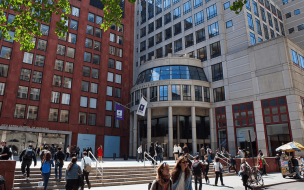
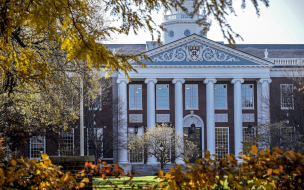
The business school itself is housed in an ultra-modern complex, in sharp contrast to many of the older buildings on campus, with large glass windows draped with posters showcasing the school’s commitment to academic achievement.
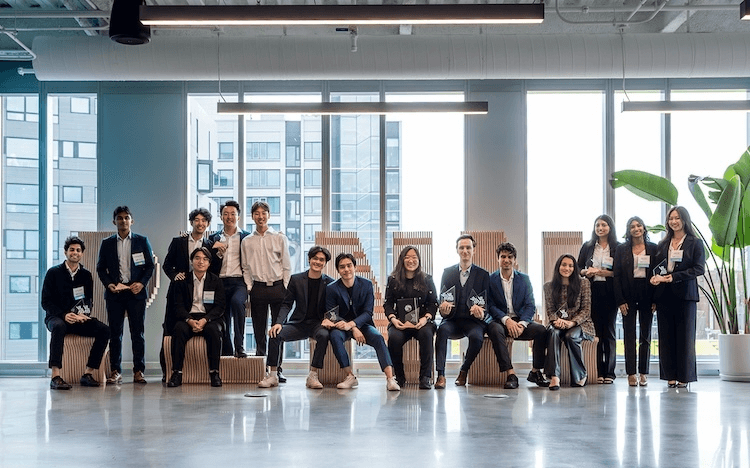
The student body is small, with around 70 students, who are mostly Korean. There is a small group of Samsung-sponsored international students who plan to work for a short period of time in the country before returning home. The full-time program offers concentrations in either finance or marketing, while offering a large variety of executive education courses to many of
The first thing you’ll notice when walking through the main entrance is a sign with the following in large print: “Foreign Language Zone”. It’s a school regulation that if you walk through these doors, English is the working language.
In a country that has one of the highest levels of homogeneity in the world, this is a big deal.
I flew more than 20 hours and I can say that the class experience was both remarkable and eerie. It was remarkable because you had students who excelled in a completely top notch Americanized MBA curriculum in their second language. It was also eerie because I was wondering how American students will keep up.
In addition to developing Western management skills from a faculty who were educated in the top
The students at SKK were like MBA students anywhere. They studied hard, trying to complete assignments and read cases for the next day of lectures; they enjoyed a good drink and a laugh at the idiosyncrasies of teachers and materials; and they also worried about life after the MBA.
The last one struck me as surprising – they were living in a country with an annual growth rate of 8% compared to the West, that was struggling to emerge from an economic catastrophe, but they were still asking themselves questions that I heard often back home: will I find a job that made the degree worthwhile? What will be I be doing 10 years from now? How will I balance work and family?
If anything, Korean working life makes these questions even more salient. There’s a reason Koreans have a reputation for working hard – it’s because they do. Real hard.
The typical working day in
You’d be lucky in
Many Koreans are opting out of the traditional path of government and the chaebols, the large Korean conglomerates that dominate the economy, and are considering careers in CSR, social entrepreneurship, and start-ups.
A walk in the idyllic streets of Samcheondong speaks to a new renaissance where people feel comfortable to pursue careers that were once frowned upon by an older generation – independent clothing designers, artists, and start-ups. The younger generation feels less bound to the traditional norms.
After years of focus on pushing the economy forward, Koreans are more self-reflective, increasingly thinking about
Despite the best efforts of the school to provide a top notch American MBA experience in the middle of
It’s the bond that explains why so many at this school felt the need to take care of me, both students and deans alike, by taking me out to dinner, decoding the customs and, more importantly, sharing stories that only the closest of friends would in the West.
Those stories went a long way to helping me appreciate the beauty and subtleties of Korean culture and society. It’s too bad the Lonely Planet guy never developed it.
Why you should join BUSINESSBECAUSE...
Connecting people before, during and after b-school
-
Build a network of useful connections
-
Gather information & get weekly newsletter
-
Get job and b-school application tips
-
Read real life stories published daily


Comments
Wednesday 19th May 2010, 09.14 (UTC)
Absolutely fascinating!
Wednesday 19th May 2010, 13.55 (UTC)
you're wondering how the US will keep up? It's not just the US - most of Europe will struggle too... how to compete with bright kids who work 14 hour days, don't take weekends of vacations??
Wednesday 19th May 2010, 16.43 (UTC)
I love this Tom! What do you think is driving students to take up CSR, social entrepreneurships and start-ups?
Wednesday 19th May 2010, 22.14 (UTC)
korean hipsters are the new japanese hipsters - just go to new york's east village
Wednesday 19th May 2010, 22.36 (UTC)
I wonder... would the older generation frown upon CSR, social entrepreneurship and start-ups? I know my parents still do.
Wednesday 19th May 2010, 23.51 (UTC)
Many many thanks for your very kind comments. Some quick responses :
- Why are Koreans moving towards CSR, SE, and start-ups? Remember, this current generation of MBA students have gone through 2 or 3 financial crises including the last one. Working for one of the large chaebols/companies or the government isn't as secure nor alluring as before. They are less willing to sacrifice lifestyle as much as the older generation.
- But these chaebols matter though. Samsung makes up 20% of the country's GDP. That's right - Samsung is equal to 20% of the country's economy. There's also the LG, Hyundai, and POSCO groups to think about.
Thursday 20th May 2010, 00.29 (UTC)
I have a close Korean friend who is also a journalist working in Seoul. The biggest impression he's given me is his drive to success, work-rate, willingness to bond to the Korean community and modesty. Something I can definitely relate to what's in your article Tom.
Monday 15th November 2010, 12.05 (UTC)
Just read this article (6 months late). Amazing.