

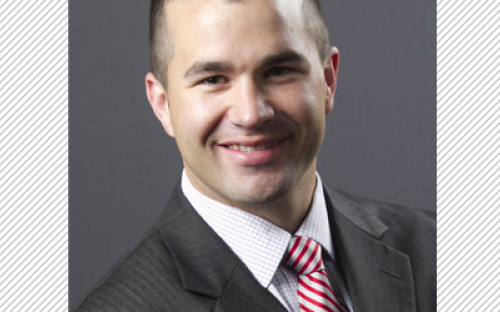


What is the main aim of your club?
The General Management & Strategy aims to educate Haas students about the various roles individuals play within Leadership Development Programs and the Corporate Strategy, Business Development, and General Management functions, and to increase the depth and breadth of these career opportunities available to Haas students.
Who is the most exciting speaker you have had this year?
This past fall we had a Haas alum, retired General Motors Vice Chair, Bob Lutz, MBA ’62, come and speak for the Dean’s Speaker-Series.
Where do you see yourself after you complete your MBA?
I see myself working in a rotational program general management role within the energy industry.
Would you say as a general rule that management by committee is more appropriate in a mature company and that conversely management by a single visionary person is essential in the development of a new business?
Certainly it depends on a number of factors for a given market, industry, and/or organizational culture. Frankly there are elements to each organizational dynamic that facilitate healthy norms. For large organizations, a single visionary can be a real asset for a company with so many moving parts; otherwise these large firms have initiatives that get lost in the minutiae of corporate bureaucracy. Conversely, committees provide organization to an otherwise massive group of people and setup processes that allow for collaboration and organized movement of information. Both facets I believe must exist in any organization in order to ensure fast and decisive action along with proper organization; whether a company is large or small.
Is it a legitimate business goal for a CEO to try to achieve a monopoly position in as many sectors as possible?
I wouldn’t think so. Aside from the almost certain regulatory issues that go along with fostering a monopoly marketplace, ultimately a CEO wants to achieve market dominance in whatever sector he/she pursues. Nevertheless, competition is what drives the growth of the industry as a whole and minimizes complacency of all stakeholders. I would think that any CEO would welcome the opportunity to compete with the confidence that a given company’s products are best for a targeted consumer.
Is the artificial creation of continuous organisational change within any corporation a pre-requisite for its ongoing health?
Yes, given the constant change in today’s marketplace, companies need to be able to quickly react to market inflection points with a organizational structure that best meets its demands in order to realize a lean and effective enablement strategy. That said, organizational alignment must follow a mission or principle-based approach so that any re-alignment is consistent with the organizational culture and values.
RECAPTHA :
0f
2e
0f
2e