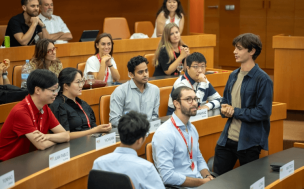




Professor Chak is Finance Practice Professor at Chinese University Hong Kong. He was speaking on a panel titled “Wages, the wealth gap and global manufacturing” alongside legal and business advisory experts based in China.
The panel pointed to moves in recent times to increase the wages of some Chinese factory workers, including those at iPad maker FoxCon and Honda. President Hu Jintao has made closing the wealth gap a major plank of policy over the next five years, and enterprises with foreign investment will be required to have a unionized workforce.
However, argued Professor Chak, growth in manufacturing wages has been below that of average wages. The average wage in China is only just catching up with Thailand and is still half that of Malaysia.
The shortage of workers under the age of 35 is restricted to the coastal industrial belt, he said. Moving a few miles inland would give producers access to untapped pools of cheap labor.

CUHK's Professor Chak Wong: export industries are highly profitable and expanding in China
The Bloomberg China Conference, sponsored by Chinese University Hong Kong, brought together an impressive group of experts to discuss several topics in relation to China from the property market and hedge funds to global geo-politics and investment. Speakers included historian Niall Ferguson, former UN under-secretary general Lord Malloch Brown, bond investor Brett Diment and Sir Evelyn de Rothschild.
Professor Chak also said that average wages for university graduates were very high in the service sector. While graduates of less prestigious universities didn’t earn as much as their peers at the likes of Tsinghua or Jiao Tong University, they were still doing a lot better than those without a college education.
Student Reviews
CUHK MBA
RECAPTHA :
f1
70
2b
e7